Plus de comptes-rendus cliquez dans le menu / More reviews click on the menu
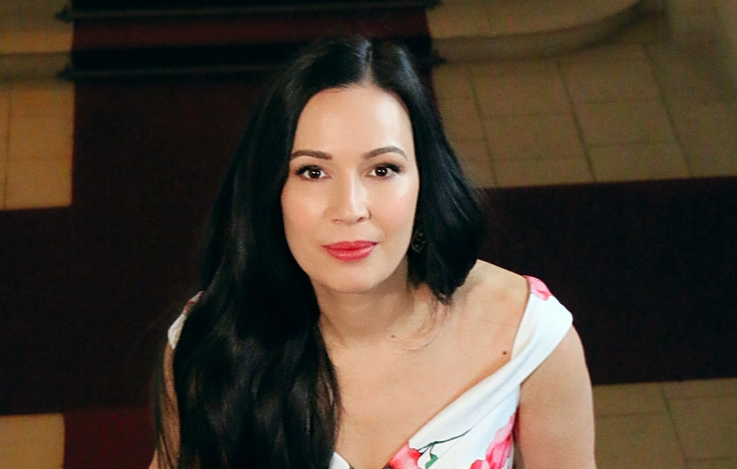
Louise, Opéra de Lyon 2026, jump-in
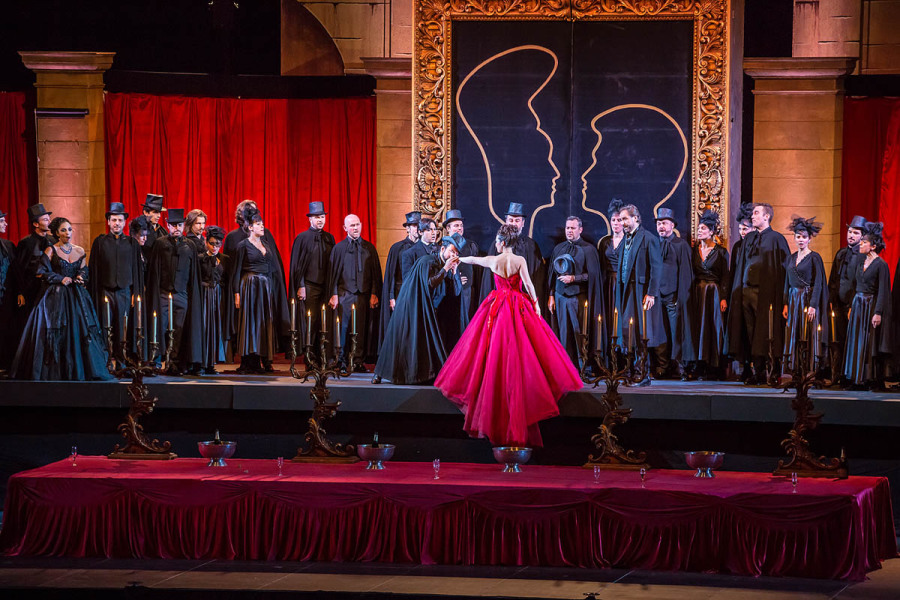
Elsa Dreisig, que l’on attendait pour cette Louise applaudie au Festival d’Aix l’été dernier, était souffrante lors de la première lyonnaise. C’est la soprano Gabrielle Philiponet qui la remplace au pied levé, au sens propre du terme tant son personnage semble sans cesse en partance : son agilité sur scène, dans une mise en scène physiquement très exigeante, est remarquable tout autant que son jeu dramatique poignant. Donnant au rôle toute l’humanité voulue par Gustave Charpentier, sa fragilité naïve, mais aussi l’impétuosité de son amour et l’affirmation de sa volonté de liberté, elle forme avec le robuste et fringant Julien d’Adam Smith un couple à la fois paradoxal et complémentaire – lui extraverti, assuré de leur bonheur futur, […] ; elle, au chant tout en inflexions subtiles, délicates, tout d’abord effarouchée et menue, se recroquevillant sur un banc ou se jetant dans ses bras. Un couple convaincant aussi par le jeu de la réciprocité et par l’évolution de Louise au cours de l’opéra, dans son statut de partenaire amoureuse inversant l’ordre convenu du désir à la suite de son grand air « Depuis le jour », épreuve parfaitement réussie pour franchir le seuil de l’acte III. On peut savoir gré à Gabrielle Philiponet, qui doit chanter Mimi dans La Bohème à Clermont-Ferrand et à Massy au mois de mars (voir également ses réponses au Questionnaire de Proust de ce mois de janvier 2026), d’avoir ainsi, dans une parfaite osmose avec ses partenaires, permis à cette représentation d’avoir lieu.
Elsa Dreisig, who was eagerly awaited for the role of Louise, which was applauded at the Aix Festival last summer, was unwell during the Lyon premiere. Soprano Gabrielle Philiponet stepped in at the last minute, quite literally, as her character seemed constantly on the verge of leaving: her agility on stage, in a physically demanding production, was remarkable, as was her poignant dramatic performance. Giving the role all the humanity intended by Gustave Charpentier, its naive fragility, but also the impetuosity of its love and the assertion of its will to freedom, she forms with Adam Smith's robust and dashing Julien a couple that is both paradoxical and complementary – he, extroverted, certain of their future happiness,[…] ; she, with her singing full of subtle, delicate inflections, initially timid and petite, cowering on a bench or throwing herself into his arms. A convincing couple also through the interplay of reciprocity and through Louise's evolution throughout the opera, in her role as a lover who reverses the conventional order of desire following her great aria "Depuis le jour," a test perfectly met to cross the threshold of Act III. We can thank Gabrielle Philiponet, who is to sing Mimi in La Bohème in Clermont-Ferrand and Massy in March (see also her answers to the Proust Questionnaire of this month of January 2026), for having thus, in perfect harmony with her partners, allowed this performance to take place.
Fabrice Malkani, Forum Opéra
La Traviata, Zaragoza 2025
Elle s'est imposée comme la star incontestée de la soirée, offrant une interprétation de Violetta d'une technique raffinée alliée à une profonde expressivité. De ses brillantes notes aiguës initiales jusqu'au poignant « Addio, del passato… », la soprano Gabrielle Philiponet a fait preuve d'une maîtrise technique et d'une puissance expressive remarquables. Sa maîtrise du legato, de ses pianissimos et de sa colorature virtuose dans « Sempre libera… », véritable test de son talent, a confirmé son art incontestable.
Se erigió en indiscutible estrella de la noche, ofreciendo una interpretación de Violetta que combinó una técnica depurada con una profunda expresividad. La soprano Gabrielle Philiponet, desde sus brillantes agudos iniciales hasta la emotiva ‘Addio, del passato…’, demostró un control técnico y una fuerza expresiva muy destacables. El dominio del ‘legato’, los pianísimos y una coloratura virtuosa en ‘Sempre libera…’, verdadera prueba de fuego, confirmaron su indudable calidad artística.
She emerged as the undisputed star of the evening, delivering a Violetta performance that combined refined technique with profound expressiveness. From her brilliant opening high notes to the moving "Addio, del passato…," soprano Gabrielle Philiponet demonstrated remarkable technical control and expressive power. Her mastery of legato, her pianissimos, and her virtuosic coloratura in "Sempre libera…," a true test of her talent, confirmed her undeniable artistry.
Luis Alfonso Bes, Heraldo.es
Faust, Lille 2025 jump-in
J'ai délibérément gardé Marguerite pour la fin, car elle remplaçait Vannina Santoni, malade, Gabrielle Philiponet remplace. Ce rôle, d'une difficulté redoutable, exige une grande palette vocale, des vocalises puissantes, un registre médium ample et une endurance à toute épreuve pour atteindre des sommets dans l'acte IV et le trio final, la voix s'élevant toujours plus haut à mesure que la fatigue se fait sentir. Philiponet a surmonté tous les obstacles, allant même jusqu'à exécuter un trille correct, et une fois son trac initial dissipé, sa voix s'est épanouie. Actrice touchante, elle s'est parfaitement intégrée à la scène, comme si elle avait répété pendant des semaines, notamment grâce à quelques lettres judicieusement placées, sans doute rapidement ajoutées à la mise en scène. Une performance remarquable, saluée avec émotion par le public lors des saluts.
I have deliberately left Marguerite until last as she was a replacement. Vannina Santoni was ill and Gabrielle Philiponet took over in what is a killer of a role: it requires a great range of colours, coloratura, much thrust in the middle voice plus the stamina to soar at full throttle in Act IV and then the final trio, getting ever‑higher as you tire. Philiponet cleared every hurdle, even displaying a decent trill, and once some initial nerves were out of the way her tone bloomed. An affecting actress, she fitted in dramatically as though she’d rehearsed for weeks, helped in the dialogue by some well‑timed letters presumably quickly woven into the production. A remarkable achievement and gratifyingly recognised by the audience at her curtain call.
Francis Muzzu, Concerto.Net
La Bohème, Avignon 2025
Les solistes sont dirigés avec justesse et brillent par leur engagement vocal et dramatique. Gabrielle Philiponet interprète une Mimì bouleversante, sa voix chaude et expressive donnant une intensité particulière à Mi chiamano Mimì et à l’ultime Sono andati? qui arrache les larmes à une audience conquise.
The soloists are skillfully directed and shine with their vocal and dramatic commitment. Gabrielle Philiponet delivers a moving performance as Mimì, her warm and expressive voice lending a particular intensity to Mi chiamano Mimì and the final Sono andati? which brings tears to the eyes of a captivated audience.
Ruth Martinez, Libre Théâtre
Voyage d'Automne, Capitole Toulouse 2024
Il s’agit là, dramatiquement et musicalement d’un des sommets de la pièce. C’est Gabrielle Philiponet qui campe cette Songeuse et qui porte ce rôle avec une force indescriptible. Elle happe notre regard dès sa première apparition avant que la voix, parfaitement placée, jamais mise en difficulté, y compris par la langue allemande, ne s’empare de nous. Ses trois apparitions (la première est muette, la deuxième est limitée à la première strophe du poème, qu’elle reprendra intégralement dans la grande scène du III) nous montrent une femme tout de blanc vêtue, comme planant au-dessus de ce qu’on devine être le champ des ruines de notre humanité.
This is, dramatically and musically, one of the highlights of the play. It is Gabrielle Philiponet who plays this Dreamer and who carries this role with an indescribable force. She grabs our attention from her first appearance before the voice, perfectly placed, never put in difficulty, including by the German language, takes hold of us. Her three appearances (the first is silent, the second is limited to the first stanza of the poem, which she will take up in full in the great scene of III) show us a woman dressed all in white, as if hovering above what we guess is the field of the ruins of our humanity.
Thierry Verger, Forum Opéra
La Rondine, Metz 2024
[…] la distribution réunie pour servir cette Rondine n’appelle elle aussi que les éloges, à commencer par Gabrielle Philiponet dont certains Lorrains se souviennent encore de la Magda chantée à Nancy en 2012 sous la direction de José Cura. La retrouver dans le même rôle une dizaine d’années plus tard confirme définitivement les affinités que cette belle artiste entretient avec l’hirondelle puccinienne. De Magda de Civry, la soprano albigeoise possède le timbre capiteux, le medium charnu, les aigus diamantins et l’intelligence du caractère. Jamais en effet son personnage ne verse dans la caricature : coquette sans minauder, amoureuse sans mièvrerie, cette Magda convient idéalement à la vocalità de Gabrielle Philiponet ainsi que le confirme l’aria « Chi il bel sogno di Doretta » délivré avec l’aplomb d’une artiste confirmée.
[…] the cast assembled to perform this Rondine also calls for nothing but praise, starting with Gabrielle Philiponet, whose Magda sung in Nancy in 2012 under the direction of José Cura is still remembered by some Lorrainers. Finding her in the same role ten years later definitively confirms the affinities that this beautiful artist has with the Puccini swallow. The soprano from Albi has Magda de Civry’s heady timbre, fleshy medium, diamond-like high notes and intelligence of character. Indeed, her character never falls into caricature: flirtatious without mincing, in love without being sentimental, this Magda is ideally suited to Gabrielle Philiponet’s vocalità, as confirmed by the aria “Chi il bel sogno di Doretta” delivered with the aplomb of a confirmed artist.
Nicolas Le Clerre, Première Loge
La Bohème, Saint-Etienne 2024
« On a déjà admiré Gabrielle Philiponet, qui a incarné Mimi à de multiples reprises, après avoir chanté Musetta (Metz, 2017). Compte tenu de l'affection dont elle souffre ce soir, les graves sont d'avantages timbrés et on perçoit combien les aigus (parfois évités) du premier acte n'ont pas leur rayonnement habituel. Mais notre Mimi va tout donner à son public et rapidement faire oublier ses tracas physiologiques pour atteindre au plus haut niveau. Le chant et le jeu de Gabrielle Philiponet trouvent à cette occasion une justesse, une vérité qui participent pleinement à notre émotion. La voix est pleine, chaude, sûre et racée, et elle traduit idéalement son amour comme sa détresse, pudique et ardente, toujours digne. Si «Mi chiamano Mimi» porte quelques stigmates de la laryngite, ceux-ci ont disparu ensuite («Rodolfo m'ama», «D'onde lieta usci») avec des ensembles plus admirables et sensibles les uns que les autres. Le «Sono andati?» de son ultime duo est pathétique, poignant. Une des plus grandes Mimi écoutées ces dernières années. »
« We have already admired Gabrielle Philiponet, who has played Mimi on many occasions, after having sung Musetta (Metz, 2017). Given the condition she is suffering from this evening, the low notes are more resonant and we perceive how the high notes (sometimes avoided) of the first act do not have their usual radiance. But our Mimi will give her all to her audience and quickly make them forget her physiological worries to reach the highest level. Gabrielle Philiponet's singing and acting find on this occasion a precision, a truth that fully participates in our emotion. The voice is full, warm, sure and classy, and she ideally translates her love as well as her distress, modest and ardent, always dignified. If "Mi chiamano Mimi" bears some stigmata of laryngitis, these have disappeared afterwards ("Rodolfo m'ama", "D'onde lieta usci") with ensembles more admirable and sensitive than the others. The "Sono andati?" of his final duet is pathetic, poignant. One of the greatest Mimi listened to in recent years. »
Yvan Beuvard, Forum Opéra
Falstaff, Opéra de Lille 2023
« Gabrielle Philiponet assume, avec aplomb, de réjouissantes ruptures de registres, pour donner aux facéties d'Alice Ford le corps qui, autrement, leur ferait peut-être défaut. Et avec quelle lumière son soprano épouse l'élan amoureux de «Ma il viso tuo su me risplenderà», qu'on aimerait, l'espace d'un instant suspendu, ne pas croire parodique!
Gabrielle Philiponet takes on, with aplomb, delightful ruptures of registers, to give Alice Ford's antics the body that, otherwise, they might lack. And with what light her soprano embraces the amorous impulse of "Ma il viso tuo su me risplenderà", which one would like, for a suspended moment, not to believe is parodic!
Mehdi Mahdavi, Opéra Magazine
Faust, Opéra de Limoges 2023
« Le soprano Gabrielle Philiponet est à son meilleur en Marguerite. Son chant bouleverse de justesse dans la ballade du roi de Thulé, puis étincelle dans l’air des bijoux. Sa scène de folie, peu avant les effusions de la prière et la possible rédemption finale, est déchirante, et son grand talent est aussi bien mis au service du collectif, ce qui transparaît très clairement dans les ensembles jusqu’à s’imposer comme l’une de nos Gretchen préférées ! »
« Soprano Gabrielle Philiponet is at her best in Marguerite. His singing just upsets in the ballad of the king of Thule, then sparkles in the air of jewels. His scene of madness, shortly before the outpouring of prayer and the possible final redemption, is heartbreaking, and his great talent is also put to the service of the collective, which is very clearly reflected in the sets until he imposes himself as the one of our favorite Gretchens! »
Anaclase
Lalla-Roukh, Wexford Festival, 2022
« Vedette de la soirée dans ce qui fut assurément l'opéra vedette du Festival, Gabrielle Philiponet a interprété à merveille le rôle de Lalla-Roukh. Avoir
un chanteur français natif a aidé, mais il y a un type particulier d'énonciation et d'expression requis pour ce genre d'opéra-comique et Philiponet était parfaite pour cela, aidant à conserver une
grande partie du caractère original de l'opéra de Félicien David. »
« The star of the evening in what was definitely the star opera of the Festival, Gabrielle Philiponet sang the role of Lalla-Roukh wonderfully. Having a native French singer helped, but there is a particular kind of enunciation and expression required for this kind of opéra-comique and Philiponet was perfect for this, helping retain much of the original character of Félicien David's opera. »
Noel Megahey, Opera Journal
Mireille Gounod, Opéra de Metz, 2022
« Dans le rôle écrasant de Mireille, Gabrielle Philiponet réussit le pari de répondre aux exigences vocales et scéniques attendues d'un soprano lyrique-léger en début d'ouvrage, franchement dramatique à partir du quatrième acte. Naturellement fraîche et légère dans les deux duos, affichant des vocalises tout à fait virtuoses à la fin de «Trahir Vincent», la voix possède toute la robustesse nécessaire aux grands ensembles des actes 2 et 4, et se tire sans dommage du redoutable air de la Crau. Une belle performance, vocale et scénique, qui devrait compter dans l'évolution de la carrière de la jeune soprano. »
« In the overwhelming role of Mireille, Gabrielle Philiponet succeeds in meeting the vocal and scenic requirements expected of a lyric-light soprano at
the start of the work, frankly dramatic from the fourth act on. Naturally fresh and light in the two duets, displaying quite virtuosic coloraturas at the end of « Trahir Vincent », the voice has qll
the necessary robustness for the large ensembles of act 2 and 4, and tackles without damage the formidable air of the Crau. A great performance, vocal and stage wise, which should count in the young
soprano's career. »
Pierre Degott, Resmusica
Otello Verdi, Opéra de Saint-Étienne 2021
« Gabrielle Philiponet accomplit, avec sa prise de rôle, un moment décisif dans son parcours judicieusement conduit. Fiordiligi, Donna Anna, Violetta Valéry, Mimì, la voilà tout naturellement Desdemona, elle aussi juvénile, sensible, saisissante d'homogénéité sur toute la tessiture. Élégiaque, indignée, résignée, la ligne mélodique, selon le vœux du compositeur ”ne cesse jamais de la première à la dernière note“... »
« Gabrielle Philiponet has reached, with her role debut, a decisive moment in her carefully managed career. After Fiordiligi, Donna Anna, Violetta Valéry, Mimì, she is now quite naturally Desdemona,
as juvenile, sensitive and with a striking homogeneity over the entire vocal range. Elegant, indignant, resigned, the melodic line ”never ends, from the first to the last note“, according to the
composer's wishes... »
Patrice Henriot, Opéra Magazine
Actualité
Interviews :
Questionnaire de Proust Lyrique
Lille.fr par Valérie Pfahl
Opéra Online par Emmanuel Andieu
 Version imprimable